

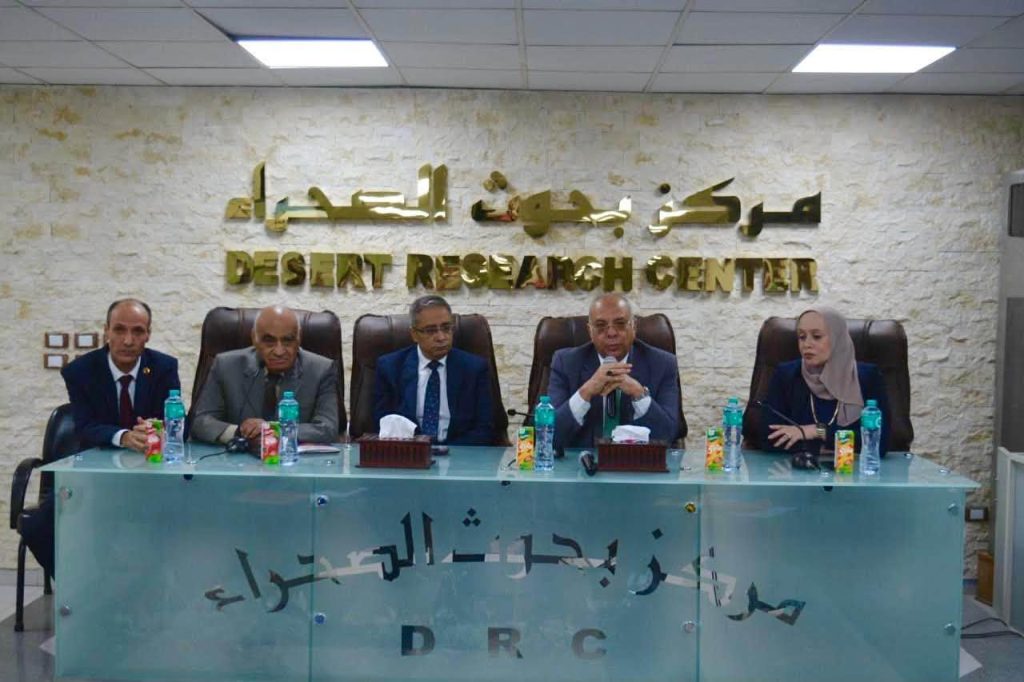
Dr. Hossam Shawky, President of Desert Research Center, inaugurated the eleventh symposium of the Egyptian Society for Camel Sciences—part of the Center’s Animal and Poultry Production Division—held at the Center’s headquarters. The symposium is titled: “Expanding Camel Breeding in Egypt.”
The symposium was attended by Dr. Mohamed Ezzat, the Center’s Vice President for Projects and Supervisor of Research Stations; Dr. Ghada Hegazy, Vice President for Research and Studies; and Dr. Hamdy Kandil, Chairman of the Egyptian Society for Camel Sciences.
The symposium addressed strategies for expanding camel rearing in Egypt, recognizing camels as a vital component of livestock—one that holds significant economic and environmental value in desert regions. It also examined the primary challenges facing the development of this sector, particularly in light of the changes currently affecting grazing environments.
Discussions covered the current status of camel populations and their geographical distribution, as well as the environmental, health, productive, economic, and social challenges faced by breeders. Furthermore, the symposium explored ways to preserve local breeds, improve rearing systems and veterinary care, and leverage successful experiences in the development of the camel sector.
The symposium concluded with a number of recommendations, most notably: establishing associations for camel herders in desert regions; strengthening cooperation with countries that produce camels; improving systems for nutrition, healthcare, and veterinary care; enhancing reproductive and productive efficiency; developing rangelands; and expanding the marketing of camel products. These measures are intended to help reduce the costs of raising camels, maximize economic returns for herders, and encourage an increase in the camel population across desert areas.
