

Pillar One: Infrastructure Development and Resource Management
Began the rehabilitation of EL-Sheikh Zuweid Research Station to transform it into an integrated center serving farmers in North Sinai.
Developed the Plant Gene Bank to preserve the genetic resources of desert plants.
Opened the Egypt Desalination Research Center of excellence- EDRC, and the Regional Gene Bank at Ras Sedr Research Station.
Projects for water desalination using solar and wind energy have been implemented, alongside an expansion in the application of smart agriculture.
Second Pillar: Partnerships and Sustainable Development
Collaboration with King Salman International University and the National Research Centre to apply agricultural research findings in practice and to exchange expertise on agricultural methods suitable for Sinai environment.
Establishing a smart development community in El-Bagha, Ras Sedr, in partnership with the General Petroleum Company (GPC). The project includes a well-water desalination unit, smart livestock and poultry production models designed for female breadwinners and people with disabilities, and a facility for recycling agricultural waste into animal feed.
Implemented productive development projects in cooperation with QNB Egypt.
Signed agreements with Misr El-Kheir Foundation and the Food and Agriculture Organization (FAO) to support agricultural and rural development and improve water-use efficiency.
Third Pillar: Supporting Farmers and Digital Transformation
Technical supervision was provided to 16 development clusters, covering an area of 11,000 acres and serving more than 2,000 families. Supplied seedlings, agricultural machinery, and research and training services to farmers. Furthermore, over 220 field visits to farmers were conducted, and more than 8,000 technical inquiries were addressed via digital platforms, through the “Ask and Consult” initiative.
Fourth Pillar: Addressing Climate Change and Flood Risks
Supported those affected by floods in “Wadi Saal” through the provision of seedlings, irrigation networks, and production inputs.
Issued technical recommendations for managing soil salinity and improving irrigation efficiency.
Intensified field monitoring to assess the impact of climate change on crops.
Fifth Pillar: Developing Strategic Crops
Supported hundreds of farmers with improved barley seeds capable of withstanding harsh environmental conditions.
Expanded oil sunflower cultivation through guidance fields and the free distribution of seeds.
Reintroduced castor cultivation to make productive use of marginal lands.
Expanded organic farming programs.
Providing technical support to the olive sector, while doubling the distribution of seedlings to reach 100,000 for the benefit of small-scale farmers.
Sixth Pillar: Supporting Livestock and Poultry Production
Organized free veterinary convoys and provided examination and treatment services for hundreds of livestock and poultry.
Distributed modern wool-shearing machines to Bedouin families.
Implementing livestock and poultry production projects to provide job opportunities for female breadwinners and youth in Ras Sedr.
Expanded the production of non-traditional animal feed and the recycling of agricultural waste.
Seventh Pillar: Empowering Women and the People of Sinai
Trained Sinai women in desert agriculture, modern irrigation techniques, and small-business management.
Allocated 5 million EGP to support women-led small and micro enterprises.
Supported rural development projects to improved household incomes within development communities.
Implemented developmental and educational activities for Sinai youth and persons with disabilities.
Conclusion
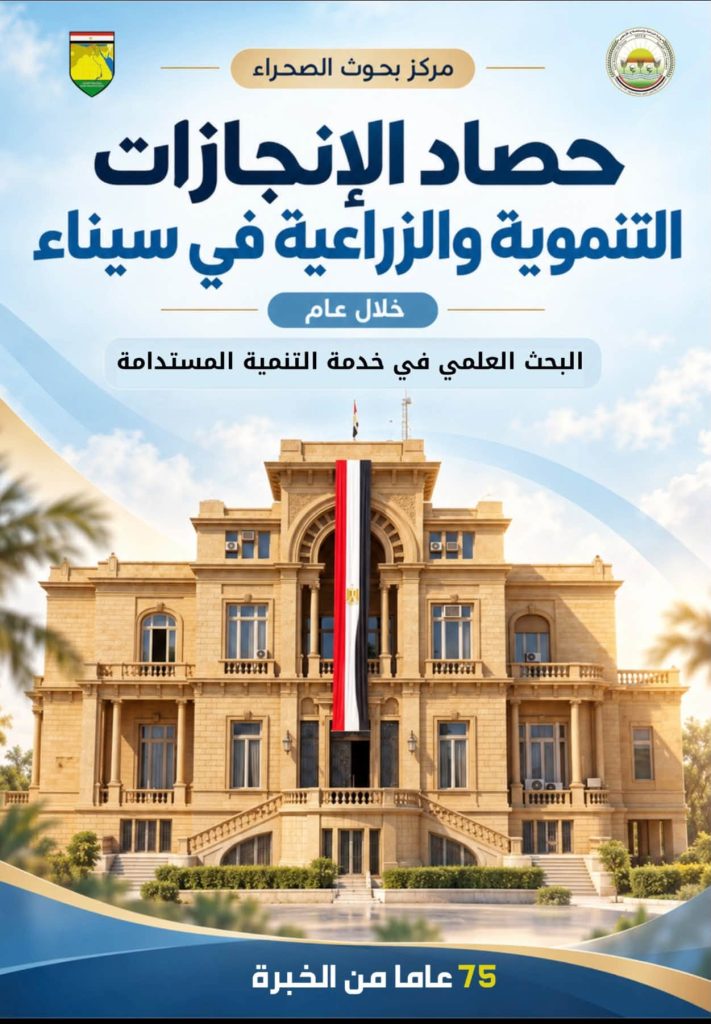
During the year, Desert Research Center focused on linking scientific research with agricultural development in Sinai by upgrading research infrastructure, improving water management, supporting strategic crops and livestock production, expanding digital guidance services, and empowering women and local communities. These efforts contribute to strengthening food security and advancing sustainable development across Sinai.
